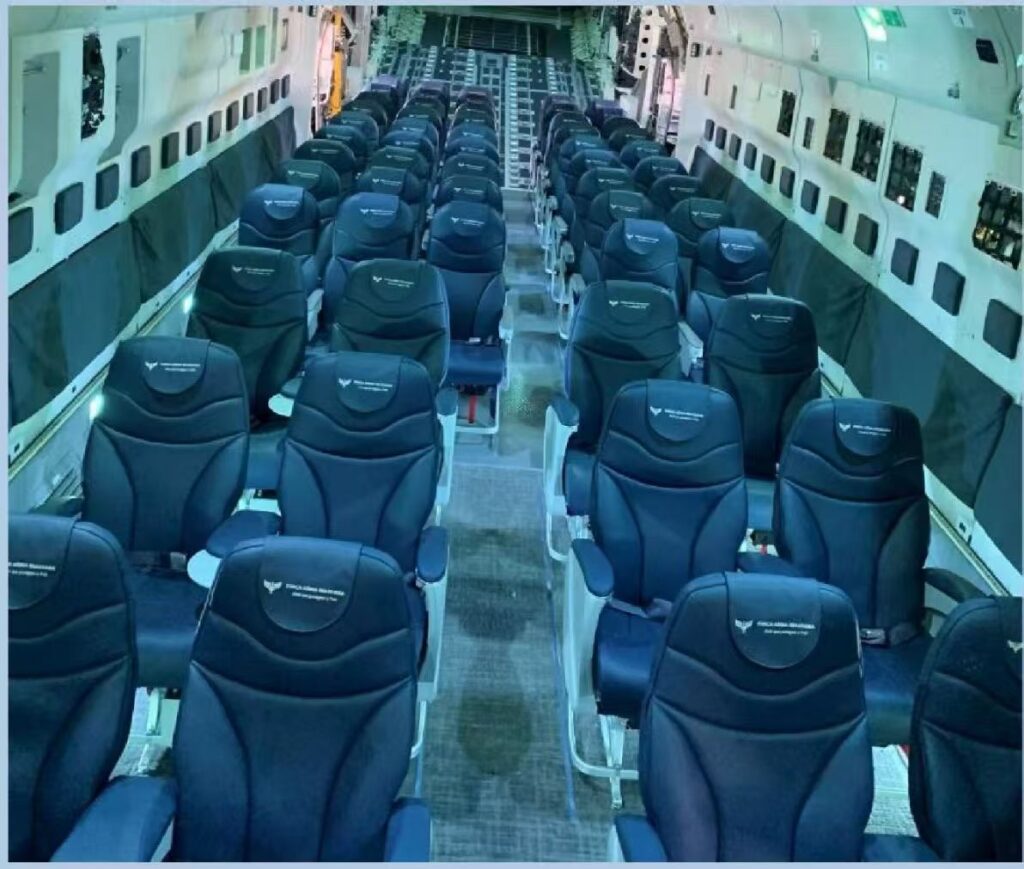
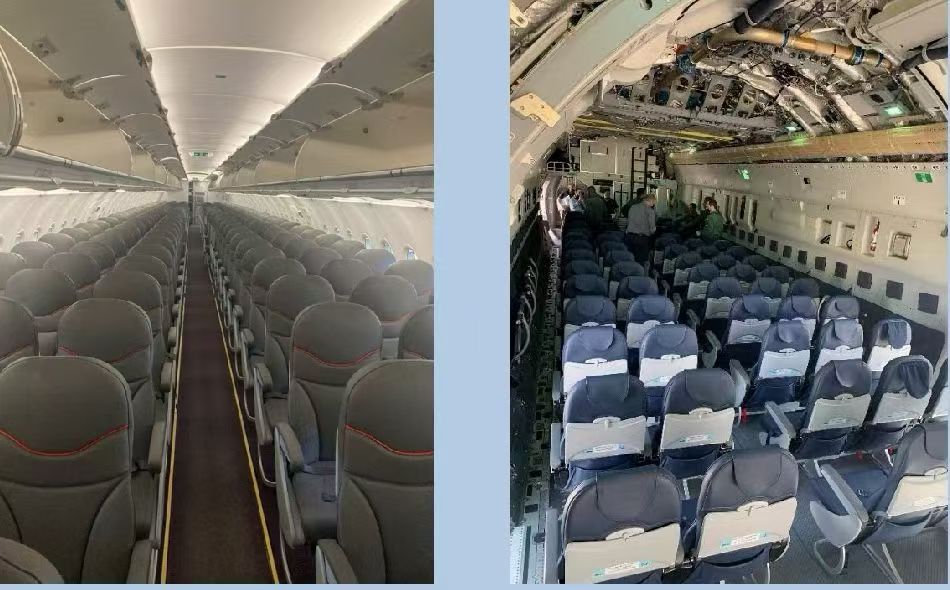
We will explore this from the perspectives of ergonomic design of aircraft seats and cabin efficiency planning.
With the continuous development of modern aviation technology, the comfort of aircraft seat design will significantly improve customer satisfaction for airlines. At the same time, the effective utilization of cabin space will save space costs for airlines and improve overall operational efficiency.
1. Ergonomic Design – Enhancing Comfort
Aircraft seat design needs to focus on the following key aspects:
Seat Depth and Width: Seat depth is typically 45-50 centimeters, ensuring sufficient support for the passenger’s back. Seat width is 45-50 centimeters to accommodate different body types.
Seat Back Angle: The angle between the backrest and the seat surface is maintained at 100°-110°, helping to reduce lumbar pressure and promote a comfortable sitting posture.
Seat Height and Footrest: Seat height should ensure that both feet can be placed flat on the ground, reducing leg discomfort. A reasonable foot support design can reduce swelling.
Lumbar Support: Providing adjustable lumbar support effectively alleviates back discomfort during long flights.
2. Integrated Design Solutions will Balance Design and Space Efficiency
Ergonomic design has a significant impact on improving passenger comfort:
Reduced Discomfort: Ergonomic seats can reduce passenger back and neck discomfort by approximately 40%.
Improved Blood Circulation: Reasonably designed seats can help improve blood circulation in the legs, reduce leg swelling, and increase blood flow by approximately 30%.
Reduced Pressure: Optimized seats can reduce pressure on the spine and lower back, relieving back pain, with a pressure reduction of 20%-30%.
Cabin Efficiency Planning
Seat Layout Optimization – Increasing Seat Quantity: The layout of aircraft seats needs to maximize the number of seats while ensuring comfort. Airlines usually adjust seat spacing based on aircraft type and route length. Short-haul flights may choose a more compact layout to increase the number of seats, while long-haul flights may provide more space for passengers to reduce crowding.
Adjustable Seats and Compact Design: Seat flexibility is crucial in improving cabin efficiency. Through adjustable seats, foldable functions, and modular design, airlines can flexibly configure seats and seating layouts according to demand, optimizing the utilization of cabin space. Seat Design Feasibility and Cost-Effectiveness: To improve the economic efficiency of aircraft, seat design must not only ensure comfort but also consider production and maintenance costs. Lighter seat designs can not only improve fuel efficiency but also reduce operating costs.
3. Balancing Ergonomic Design and Cabin Efficiency
Ergonomic design and cabin efficiency planning must work together to ensure a balance between comfort and space utilization. The following are key factors in combining the two:
Seat Pitch Optimization: In cabin efficiency planning, reasonable seat pitch design can maximize the number of seats while reducing passenger crowding. Ergonomically designed seats can ensure that passengers still enjoy a good comfort experience in a relatively compact layout.
Space Utilization and Comfort: Ergonomic design not only focuses on the comfort of the seat itself but also considers how to provide a better riding experience within limited space. For example, the design of the seat back should be optimized so that more passengers can utilize the limited space without sacrificing comfort.
4. Future Trends: Intelligence and Flexibility
With technological advancements, future aircraft seat and cabin designs will focus more on intelligence and flexibility:
·
Smart Seats: Seats will be able to automatically adjust according to passenger body type and needs, including backrest angle, seat firmness, and other functions, to provide a personalized comfort experience.
·
Modular Seat Design: More flexible seat layouts and modular designs will help airlines adjust seat configurations based on routes and passenger needs, improving space utilization.
·
New Materials and Lightweighting: New high-performance materials will be widely used, making seats not only more comfortable but also lighter, improving fuel efficiency and economic benefits.
5.Collaborating with such partners:
Focusing on one-stop aircraft seat design services, we not only prioritize ergonomics to ensure passenger comfort but also balance cabin efficiency and optimize space utilization.
A professional one-stop aircraft seat design team can improve project execution efficiency and reduce overall operational risks through full-process design, from initial planning to final implementation, helping to improve flight quality and passenger satisfaction.
How to find such an aircraft seat design company? Please contact me, and I will provide you with detailed answers.
Deng (Zoe)
Zoey121258@gmail.com
Shenzhen Sunbright Aviation Technology Co., Ltd.
Wechat: +8618628129498
Whatsapp:+8613658010519
#Aircraftseats
#Precisionhardware
#CNC
#One-stophardwaresolutions
#Fullprocess